Sunday, February 28, 2016

Detecting Hidden Cameras: A Basic Introduction To Counter Surveillance

By Matthew Schafer
Copyright 2016, All Rights Reserved


One of the things I really enjoy about teaching self-defense is quite often my clients will bring up great points or ask questions that lead me to cover something that I might not have or make me realize there is something new I have to address in my training curriculum.  Case in point, I was recently training a young college aged girl and she brought up the topic of hidden cameras.

She told me a friend of hers stayed at a very small motel while on a cross country road trip and while she was lying in bed trying to sleep she noticed every time a car drove by and the headlights lit up her room a shiny dot appeared on the ceiling for a brief second.  She ended up standing on a chair to investigate only to find out that there was a small camera hidden in the light fixture pointed straight at the bed.  Luckily, other than showering, she had been completely dressed then entire time in the room but she was still very upset.  When she complained to the front desk they denied there was a camera and refused to come to the room and see for themselves so she called the police but they never came.  After waiting for the police for 2 hours she gave up, spent the night in her car, and left first thing in the morning.

The most nerving thing, according to my client, was the people at the front desk told her that even if there was a camera in her room it wouldn’t be illegal because it is their motel and when she checked in she was clearly told the motel had hidden “security cameras” for her own protection.  The truth is that depending on where you are hidden cameras may or may not be perfectly legal.  This is an area where the law is catching up with the times and you need to check the laws of the area you’re in.

So, what can you do about it?  The first thing is you assess your environmental risk.  If you live someplace where you strictly control the access then you probably don’t need to worry about it too much unless you’re traveling.  Therefore, know that anytime you’re staying in a place where you don’t control the access then hidden cameras are a definite risk.
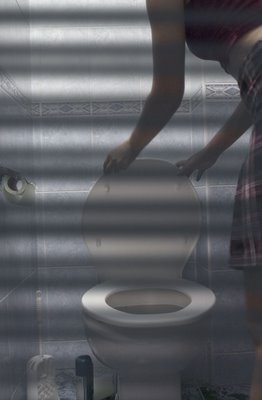
Be very mindful of the risk if you are staying in a hotel (the cheaper the hotel/motel the greater the risk but it does happen in expensive hotels and resorts), also be mindful if you’re staying at a friend’s house, or if you rent.  If you rent a house or apartment then you have other people with keys.  A copy of your front door key may also be in possession of your landlord, a management company, and various handymen and maintenance staff.  A downside of renting is that your landlord, or those acting as their agents, can legally enter your home when you’re not there in certain situations…or in any situation illegally.

Next, look at your personal risk.  Is there someone who could have motive and opportunity to put a camera in your home? Do you have a stalker or go through a bad break up?  Does your landlord, anyone that works for them, or even a member of their family seem creepy or out of place?  Do you travel a lot?  People are most vulnerable when they come out from their homes and travel, and the longer the distance the more vulnerable they get because they may not know the area or have resources there.  Plus, the more you travel the more you will find yourselves in hotels and the higher your risk of encountering hidden cameras.

A few more questions to ask  yourself are: are you famous, rich, related to or work for someone that is, or is there any other reason that someone might want to target you specifically because of who you are, who you know, who you’re related to, or who you work with/for?

In just a little bit we’ll discuss what happened to ESPN celebrity Erin Andrews.  She is a perfect example of someone with a higher than normal personal risk.  Erin Andrews is rich (check), famous (check), she knows and works with sports celebrities (check), she herself is considered a very attractive female (check, an attractive female is always at a greater risk but an attractive female who is also a celebrity has a greatly increased risk), she travels a lot (check), and she had a stalker she knew about so there was someone who may want to hurt her (check). 

There are also certain times when you should check for cameras and other devices.  Three main times when you should check for a device are: 1.) When you first take possession of the location.  When you first move into the apartment or house or when you first enter your hotel room.  2.)  When you return to the location after a long absence.  If you leave the location for a longer than usual absence such as being gone for the weekend or gone on vacation you should check it.  3.)  After the location has been violated.  A location is violated when someone you don’t trust has been inside for a significant amount of time.  If a landlord, handyman, maintenance person, or exterminator was in your room or home you should check it since they not only have access but are carrying tools. 

For example, a client of mine told me a story about an ex-boyfriend she had that couldn’t accept their breakup.  He started sitting outside her apartment and showing up at her job.  After a while he came up to her apartment and started banging on her door and when she opened it he pushed his way in, ran into her bathroom, and locked the door.  She said he refused to come out for about 5 minutes at which point she threatened to call the police; at that point he came out and apologized to her saying he had diarrhea and left.  She thought he might have stolen something so she looked around her bathroom only to find a shoeprint on her toilet seat, so she stood on the seat herself only to find a small camera tucked into an air vent.


Going into dressing rooms and public bathrooms also puts you at a high risk.  There have been thousands of cases of an employee or even just another customer hiding a camera in a dressing room at a store to spy on women.  A dressing room should always be checked before you remove any clothing.  Public bathrooms provide a little less of a risk but you should always check the stall, toilet, and surrounding area for anything resembling a camera lens.

Based on everything above you need to figure out just how vigilant you should be in your everyday life, but you should always take certain steps when
 you’re staying in one of those areas where a hidden camera may be more likely.

So let’s say that you’re in a hotel room; what should you do to protect yourself and your privacy and how can you find out if there are any hidden cameras?  Luckily there are some really easy steps.  Let’s look at what you should do in order.

First, let’s deal with the cameras that are not hidden.  The first thing you should do is go over to the desk and find that notepad they leave for you, normally over by the phone, and tear off the top piece.  Take a piece of tape and tape that paper over top of the peephole in your door, if you don’t have any tape you should be able to ball it up and jam it inside, just make sure it doesn’t fall out.

The peephole is a classic method of spying on you and for about $30 anyone can buy a “reverse peephole viewer” which allows someone to stand outside in the hallway and watch you in your room without you knowing.  This is what happened to popular ESPN personality Erin Andrews a few years ago.  A stalker followed her to a hotel room and used a camera that was fitted with one of these viewers to record her walking around naked in her hotel room through the peephole while she had no idea.  He even released the nude photos on the internet.  So cover up the peepholes in your hotel room and also your apartment or house (there are companies that sell peephole covers if you’d want something more stylish and permanent).

Even though this is a bit of violation of Ms. Andrew’s privacy I recommend everyone stop and go to google, select “images,” and search for “Erin Andrews Nude.”  I’m not trying to embarrass her, violate her privacy, or reward her stalker but the pictures are up there anyway, they are not going anywhere, and I want to make something positive come out of them by using them to make an impact on you by showing you the degree of what can be seen through a peephole.  While these pictures are fuzzy they show a good degree of the room and keep in mind this guy was standing outside her room in the hallway, she had no idea that she had been recorded until the pictures showed up online.  I believe by seeing the photos yourself you’ll take this issue far more seriously than anything I could do myself (if the pictures are not enough you can easily find the actual video online and that seems to do it for most people.  I think that is because the video makes it seem more “real”).

Next, tape a piece of paper over the camera in your laptop or tablet.  Criminals can easily hack your computer and activate the camera so they can watch you without your knowing.  Always have the camera on your computers and tablets covered up.

After that take your smartphone into consideration; it is also not hard to hack your smartphone which can see and hear everything you do.  If you have a smartphone and privacy is a big concern I recommend leaving it turned off and then turning it on and checking it a few times a day.

The last non-hidden camera is the TV; I recommend when you get to a hotel room you unplug your TV unless you’re watching it.  The first reason is because inside a TV is a good place to hide hidden cameras or listening devices and if that is the case they’ll wire the device into the TV so it can be left there and the perpetrator doesn’t have to worry about replacing the battery.  By unplugging the TV you should turn off any device hidden inside.  Second, your TV is probably spying on you anyway.

A lot of TVs today have cameras in them and the smart TV’s even have microphones.  Just like a criminal can hack your computer and watch you through your webcam a criminal can also hack the modern TV and use their cameras too.

Beyond that, smart TV’s are actually designed to spy on you, watching you and listening to everything you say.  Samsung Smart TVs even come with a warning that says:

“Please be aware that if your spoken words include personal or other sensitive information, that information will be among the data captured and transmitted to a third party through your use of voice recognition.”

It is a scary world; even if you have a newer TV at home I recommend always unplugging it unless you’re watching it and even then be careful what you say around it.  It is a very real possibility that you could be sitting in your own home and mention to your spouse that you committed a crime or what your bank account pin number is and your TV will record that information and send it to one of their third party companies who could sell it, have an employee steal it, or in the case of a crime confession perhaps notify the police.

I also want to mention protecting your privacy by protecting your computer.  A common scam at hotels is for an identify thief to purchase a wifi router and set its name to the same name as your hotel.  When you go to connect to the internet you’ll see a list of connections available and there will be one saying “Holiday Inn” or maybe “Holiday Inn Free Wifi” at the top and when you connect to it the connection won’t be secured and your computer will be accessed, maybe the camera as well, and the information on your computer will be stolen.  This happens more overseas but it does happen quite a bit in the US.

Always ask at the front desk what their wifi router’s is named and look at the complete list your computer gives you before you pick one, because there might be multiple connections named “Holiday Inn” and only one is legitimate.  Even better than this is to bring your own secured connection with you while you travel.

I also want to discuss two way mirrors for a moment.  A while back there was something going around the internet that said if you place your finger on a mirror and the reflection of your finger touched your actual finger (there was no gap in between) then the mirror is actually two way glass and someone could be standing on the other side watching or recording you.  This is false to a large degree and I’m not going to get into why, but I will tell you a much more accurate method of detecting a two way mirror.

First, if the mirror is hung on the wall it is just a mirror as in order for two way glass to enable spying on you the mirror would have to be built into the wall.  If the mirror is built into the wall tap on it with your knuckles; if there is glass and wall behind it you should hear a sharp “thud” but if it opens to another room you should hear a hollow sound.  Lastly, two way mirrors require the light on your side to be brighter than the light on the other side so turn off the light, place your eye right up to the glass, and cup your hand around your eye to block out extra light.  If there is another room behind the glass you should be able to see the faint outlines.

Now that we’ve covered all of that what about hidden cameras themselves?  Here is what you need to know to find hidden cameras.

Look in the typical areas that cameras get hidden as chances are that the person spying on you is not professionally trained in covert surveillance so they’ll make “rookie mistakes.”  Common areas are books on the shelf, picture frames, alarm clocks, clocks, smoke alarms and detectors, inside air vents, lamp bases and lamp shades, and any other small item sitting out.  In the bathroom check inside the toilet (yeah, I know), the air vent in or near the shower, and even the shower head itself.


The two main types of cameras you’ll find are wired and wireless.  Since wireless cameras run on a battery they have to be larger than wired devices are to account for its battery.  These devices are just quickly placed in areas and camouflaged to try to hide them.  These devices can be quickly set up but they are larger and have limited power so they typically can only record for a matter of hours before they run out of juice and the perpetrator has to come in and replace the battery.

Wired cameras are smaller so they're easier to hide but they have to be wired into the buildings electrical system or another device so they take longer to install, and may have wires sticking out that will give it away if not installed properly.  In a situation where someone wants to spy on someone in a hotel room or apartment they don’t want to risk being caught by continually going in and changing the battery so for long term surveillance wired cameras are generally used.

You also have to be on the lookout for recording devices as well as cameras.  While these devices cannot see you they can listen in to all the private details of your life and may just be able to acquire enough information to steal your identity.  Since a wired device needs to be wired into the electrical system (or another electronic device) they are usually found where electricity starts and stops.  Light switches, power outlets, and light fixtures are the most common places for wired devices because all the perpetrator has to do is unscrew the cover plate or fixture, use the wires which are right there meant to be used, push the device inside the wall, and then put the cover plate back on. 

Keep this in mind while you’re looking.  Are there any strange wires behind a book case that indicate a camera in a book?  Is there a strange wire running down a wall?  Also, look for items that cameras are wired into.  You can go online and buy alarm clocks, picture frames, smoke detectors, ball point pens, and many other items with cameras built inside.  Step back and look at the room and ask yourself if anything looks out of the ordinary.

How do you look for these devices?  There is a couple easy ways.  Since a camera lens reflects light you can grab a good bright flashlight and then turn off all the lights and close the curtains so that the room is as dark as possible.  Slowly shine the flashlight all over the room and anyplace you suspect a camera might be and see if you notice anything reflecting back at you.  Since hidden cameras have small lenses you normally will see the tiniest little speck of light shine back at you.  Any time you see something reflecting the light back remember where you are standing and then go and see what that item is and if it is not a camera return to your spot and keep looking.  Since CIA and other intelligence agents often have little to no equipment on them when working undercover this is the most common method they use if they don’t have a bug detector.

The next option is to get a bug detector.  I picked up one for just $15 that is decent for most people (meaning you’re being targeted by common criminals who buy their equipment online and not government agencies with huge budgets) called the “CC308+” which you can easily find just by searching for that name.  This is a cheap device but it still works great for most surveillance devices.

The CC308+ has a red lens you look into while you press a button to light up some LED’s on the other side.  By using this red lens and the LEDs any type of lens shines brightly and is easily spotted.  This method is better than using a flashlight only because it is easier to see with the red filter.  The device also detects radio signals so it can find listening and recording devices.  You simply turn it on and then listen to the hum and watch a row of red lights.  The closer it gets to something sending a radio signal the louder it beeps and more lights light up.  You simply take it around your hotel room and make sure to hit all wall switches, electrical outlets, light fixtures, books, and anywhere else a device could be and check what sets it off (it will go off for your cell phone and for your wifi modem since those both work with radio signals).

Many women keep this, or a similar device, in their purse and carry it around with them.  Now when they're in the dressing room at a store, a public bathroom, or end up having to stay the night someplace they don't trust they just pull it out and scan the area.  In an dressing room you'd simply take this device out, turn it on and extend the antenna, and then move it around the mirror, door, bench, etc.  If only one light is on then you're fine but if it detects a camera, listening device, or anything sending a radio signal it will light up and make a squealing noise.

You can also use this device to sweep your car to see if there are any cameras, listening devices, or GPS trackers hidden in your vehicle.  When should you be concerned about GPS trackers?  Anytime you could be under investigation by someone.  This could include stalkers and jealous spouses.

Do a quick environmental analysis and personal risk assessment.  Are you in a foreign country?  If so that government may track you.  Do you work for a large company, the US government, or a company that deals with the US government?  If so the foreign government may have more reason to track you.  If you’re in the US, are you a person that could attract a stalker?  Do you have any enemies or people that are mad at you?  If someone was to take you hostage is there a way they could ransom you for a lot of money?  Are you cheating on your spouse or do they suspect you of doing so? 

Here is one most people don't think about, did you file a claim for worker’s compensation?  If so, many times the insurance company will hire a private investigator to follow and record you to see if you are actually injured, and regardless of the law, often these companies don’t want to have someone follow you constantly so they’ll plant a GPS tracker on your car and show up here and there to try to catch you.  Typically the device will be mounted with strong magnets underneath your car by the rear wheels, but you should still check all around inside and outside.

Always be mindful and if you answered “yes” to some of these questions you should take extra steps to protect yourself; seeing that a decent bug detector is only $15 and it only takes a few minutes to sweep your car it isn’t too much of a hassle.

There are much better devices out there and I am not endorsing the CC308+, just stating that it seems to work fine, is widely used, and at $15 is pretty cheap.  More expensive ones can run up to hundreds of dollars and some will let you view the signal they find so once you detect a signal you can look at a monitor and if you see an episode of “I Love Lucy” you know it is a TV signal but if you see yourself on the monitor you know you just found a bug.

There are also several smartphone apps that claim to find bugs but they come with mixed reviews.  Most of these work by having you take a picture of part of the room and the app will analyze it and highlight any camera lens they find.  Since the apps have mixed reviews and the CC308+ is only about $10 more and about the size of a small phone personally I would use that until there is universal consensus about the apps.

Why Put Your Windows Down?


By Matthew Schafer
Copyright 2016, All Rights Reserved


The other day a friend of mine and I were watching the movie “Sicario” and he asked a really good question.  In the movie there is a scene where the “good guys” in the movie are escorting a captured drug lord from Mexico to the US via convoy of black SUVs.  Due to a broken down car they have to stop just on the US side of the boarder on a four lane road where they encounter two cars filled with Mexican Cartel members trying to get the drug lord back and a gun fight erupts.  

Here is a link to the clip:  https://www.youtube.com/watch?v=TU9L_MAfp3c

He made a good observation that when the “good guys” noticed the cartel members the first thing they did, other than call it out, is to put down the windows in their vehicles.  He commented that he didn’t understand that, after all one would think you want to leave your windows up for protection.  After thinking about it for a moment he concluded that you would probably want to put them down so you could shoot through the windows but he still questioned why the windows were put down on the opposite side of the car.  In fact, as soon as the “bad guy’s” location was called out the very first thing that happened was the guy in front passenger seat put his window down.

This is a pretty good question and one there is a good answer for.  Basically, you’re either driving in an armored car or you’re not.  If you’re in a car with bullet proof (resistant) windows then the windows should stop most rounds (decent bullet resistant glass will stop a round from an AK-47 or a M14 but probably won’t stop a .50 caliber round).  If you’re in an armored car you want to stay put with the windows all the way up and focus on driving away instead of fighting.  No product is completely bullet proof so with enough hits any armor will eventually give; therefore the armor in a vehicle isn’t meant to protect you all day from arms fire, but rather protect you for that moment so that you can get away and get someplace safer.

If you’re not in an armored vehicle then the glass in the windows will simply not stop a bullet.  If you’re in a vehicle and you know gunplay is about to start, or even if your evacuating an area and you know gunplay might happen, putting your windows down is one of the first things you want to do after the vehicle gets mobile.  

If your windows are up and you have to fire from inside a vehicle the windows will trap some of the sound of that gunshot damaging your hearing far more than if they were down.  In a violent encounter you want to be able to see and hear so you don’t want to risk making yourself temporarily deaf.
Next, if you have shoot through glass then the glass can alter the trajectory of your bullet. Your carefully lined up shot now could hit higher, lower, left, or right or completely miss simply because it had to pass through the glass first.

On the other side, if your window isn’t going to stop the bullet then it is going to shatter instead.  Instead of just a bullet entering your car now you have a loud shattering noise which will distract people and flying glass which could injure people.  After the shattering sound and flying glass you’ll have pieces of broken glass laying around which can injure you while you are trying to move around either for cover or to return fire.

If you know gunplay is a possibility and your window won’t stop a bullet then get it out of the way, otherwise instead of returning fire, getting behind cover, or focusing on your driving (all things that can save your life) you may instead be distracted, cut by glass, and temporarily deaf (all things that can cost you your life).

Monday, December 7, 2015

How Many Mass Shootings?

By Matthew Schafer
Copyright 2015, All Rights Reserved


Context is a funny thing, without it anything can mean anything.  Mass shootings are, of course, horrible and this should be an area where people strive particularly to provide context but unfortunately this isn’t the case.  Instead people use these situations to further their own agendas.

There is this statistic going around, I’ve seen it in a few articles and all over Facebook, that so far in 2015 there have been 355 mass shootings.  That number was even given in an article ran in the Washington Post.  While most people read that and freaked out I, and others, read that and thought “bullshit.”  There have not been 355 mass shootings in the US this year; that is ridiculous.

Luckily others thought so too and found out where this statistic came from.  This statistic comes from www.shootingtracker.com a website run by, you guessed it, gun control advocates.  How did this group arrive at the number 355?  It seems that they did it by using their own definition of “mass shooting” to inflate the numbers.  The founder of the “shooting tracker” project, who calls himself “Billy Speed”, was quoted in an interview saying, “Three years ago I decided, all by myself, to change the United States’ definition of mass shooting.”

I have always found that whenever there is a big misunderstanding that just won’t go away often, at the core of the issue, is simple semantics.  Many people have their own definition of what a mass shooting is and this isn’t helping anyone.

The FBI defined a mass shooting as a single shooting event in which 4 or more people were killed.  In 2013 they lowered their definition to incidents where 3 or more people were killed.

Here is where context is so important; when I say “mass shooting” you naturally think of some whack job grabbing a bunch of guns and shooting up a mall, school, church, restaurant, theater, or another public place while dozens to perhaps hundreds of people hide or run for their lives.  That is what I think of too and that really is what we are all concerned about.  However, that hasn’t happened 355 times this year.

What we have to remember when looking at statics about violence is that America is actually a pretty safe place and the lion’s share of all the violence reported on in these statics is actually gang on gang violence that occurs in select small pockets of bad neighborhoods in some of our biggest cities.  If you hear a story that 5 people were killed in a shooting spree you’re probably picturing 5 innocent law abiding citizens like yourself being gunned down by a criminal, however, chances are if you looked into the story a little more chances are the shooting happened in a bad neighborhood in a big city and it was one gang shooting another gang, probably over drugs.

I’ve always liked www.motherjones.com and they been keeping a database on mass shootings that goes back to 1982.  However, theirs filters out the white noise, so to speak, so we can see the real problem. Their data base looked at instances where 4 or more people were killed but they removed cases of gang on gang violence, domestic violence situations that occurred in a private residence, and cases of armed robbery.  After these things were removed what was left was just instances of what you think a mass shooting should be: some asshole shooting up a public place.

So, how many times has some asshole shot up a public place this year?  4 times.  There have only been 73 true mass shootings in the US since 1982 (which is still too many).  In those last 33 years there has only been 502 people killed in mass shootings, a number that sounds large but when put in context it really isn’t.  Over the last 33 years 15 people have died, on average, by being caught in a mass shooting each year while 52 people die each year from lightning strikes. 

  
You are nearly 4 times more likely to be killed in a lightning strike than in a mass shooting.  What are your chances of dying in a lightning strike?  I looked it up and according to the National Center for Health Statistics it is: 1 in 89,930.

Below I’ve taken information from Mother Jone’s database to list every single mass shooting since 1982 that meets our criteria.

Note: Other public shooting attacks, such as the rampage at Fort Hood in April 2014, another in Isla Vista, California in May 2014, and another on a bridge in Wisconsin in May 2015, have not been included because there were fewer than four victims shot to death in each of those cases.

2015
6/17/2015, Charleston Church Shooting, Charleston, South Carolina, 9 killed, 1 injured
7/16/2015, Attack on military sites, Chattanooga, Tennessee, 4 killed, 3 wounded
10/1/2015, Umpquah Community College shooting, Roseburg, Oregon, 9 killed, 9 injured.
12/2/2015, San Bernardino Shooting, San Bernardino, Calif, 14 killed, 21 injured


2014
10/24/2014, Marysville-Pilchuck High Schoolshooting, Marysville, Washington, 5 killed, 1 injured
2/20/2014, Alturas tribal shooting, Alturas, California, 4 killed, 2 injured

2013
4/21/2013, Pinewood Village Apartment shooting, Federal Way, Washington, 5 killed
6/7/2013, Santa Monica rampage, Santa Monica, California, 6 killed, 3 injured
9/16/2013, Washington Navy Yard shooting, Washington, D.C., 13 killed, 8 injured

2012
2/22/2012, Su Jung Health Sauna shooting, Norcross, Georgia, 5 killed
7/20/2012, Aurora theater shooting, Aurora, Colorado, 12 killed, 58 injured
8/5/2012, Sikh temple shooting, Oak Creek, Wisconsin, 7 killed, 3 injured

2011
10/14/2011, Seal Beach shooting, Seal Beach, California, 8 killed, 1 injured
9/6/2011, IHOP shooting, Carson City, Nevada, 5 killed, 7 injured
1/8/2011, Tucson shooting, Tucson, Arizona, 6 killed 13 injured

2010
8/3/2010, Hartford Beer Distributor shooting, Manchester, Connecticut, 9 killed, 2 injured

2009
3/29/2009, Carthage nursing home shooting, Carthage, North Carolina, 8 killed, 3 injured
4/3/2009, Binghamton shootings, Binghamton, New York, 14 killed, 4 injured
11/5/2009, Fort Hood massacre, Fort Hood, Texas, 13 killed, 30 injured
11/29/2009, Coffee shop police killings, Parkland, Washington, 4 killed, 1 injured.

2008
2/7/2008, Kirkwood City Council shooting, Kirkwood, Missouri, 6 killed, 2 injured
 2/14/2008, Northern Illinois University shooting, DeKalb, Illinois, 6 killed, 21 injured
6/25/2008, Atlantis Plastics shooting, Henderson, Kentucky, 6 killed, 1 injured

2007
2/12/2007, Trolley Square shooting, Salt Lake City, Utah, 6 killed, 4 injured
4/16/2007, Virginia Tech massacre, Blacksburg, Virginia, 33 killed, 23 injured
10/7/2007, Crandon shooting, Crandon, Wisconsin, 6 killed, 1 injured
12/5/2007, Westroads Mall shooting, Omaha, Nebraska, 9 killed, 4 injured

2006
1/30/2006, Goleta postal shootings, Goleta, California, 8 killed
10/2/2006, Amish school shooting, Lancaster County, Pennsylvania, 6 killed, 5 injured

2005
3/12/2005, Living Church of God shooting, Brookfield, Wisconsin, 7 killed, 4 injured
3/21/2005, Red Lake massacre, Red Lake, Minnesota, 10 killed, 5 injured

2004
12/8/2004, Damageplan show shooting, Columbus, Ohio, 5 killed, 7 injured

2003
7/8/2003, Lockheed Martin shooting, Meridian, Mississippi, 7 killed, 8 injured

2001
2/5/2001, Navistar shooting, Melrose Park, Illinois, 5 killed, 4 injured

2000
12/26/2000, Wakefield massacre, Wakefield, Massachusetts, 7 killed

1999
4/20/1999, Columbine High School massacre, Littleton, Colorado, 15 killed, 24 injured
7/29/1999, Atlanta day trading spree killings, Atlanta, Georgia, 9 killed, 13 injured
9/15/1999, Wedgwood Baptist Church shooting, Fort Worth, Texas, 8 killed, 7 injured
12/30/1999, Hotel shooting, Tampa, Florida, 5 killed, 3 injured

1994
6/20/1994: Air Force base shooting, Fairchild Air Force Base, Washington, 5 killed, 23 injured.

1998
3/6/1998, Connecticut Lottery shooting, Newington, Connecticut, 5 killed, 1 injured
3/24/1998, Westside Middle School killings, Jonesboro, Arkansas, 5 killed, 10 injured
5/21/1998, Thurston High School shooting, Springfield, Oregon, 4 killed, 25 injured

1997
9/15/1997, R.E. Phelon Company shooting, Aiken, South Carolina, 4 killed, 3 injured
12/18/1997, Caltrans maintenance yard shooting, Orange, California, 5 killed, 2 injured

1993
7/1/1993, 101 California Street shootings, San Francisco, California, 9 killed, 6 injured
8/6/1993, Luigi's shooting, Fayetteville, North Carolina, 4 killed, 8 injured
12/7/1993, Long Island Rail Road massacre, Garden City, New York, 6 killed, 19 injured
12/14/1993, Chuck E. Cheese's killings, Aurora, Colorado, 4 killed, 1 injured

1992
5/1/1992, Lindhurst High School shooting, Olivehurst, California, 4 killed, 10 injured
10/15/1992, Watkins Glen killings, Watkins Glen, New York, 5 killed

1991
10/16/1991, Luby's massacre, Killeen, Texas, 24 killed, 20 injured
11/1/1991, University of Iowa shooting, Iowa City, Iowa, 6 killed, 1 injured
11/14/1991, ,Royal Oak postal shootings, Royal Oak, Michigan, 5 killed, 5 injured

1990
6/18/1990, GMAC massacre, Jacksonville, Florida, 10 killed, 4 injured

1989
1/17/1989, Stockton schoolyard shooting, Stockton, California, 6 killed, 29 injured
9/14/1989, Standard Gravure shooting, Louisville, Kentucky, 9 killed, 12 injured

1988
2/16/1988, ESL shooting, Sunnyvale, California, 7 killed, 4 injured

1987
4/23/1987, Shopping centers spree killings, Palm Bay, Florida, 6 killed, 14 injured

1986
8/20/1986, United States Postal Service shooting, Edmond, Oklahoma, 15 killed, 6 injured

1984
7/18/1984, San Ysidro McDonald's massacre, San Ysidro, California, 22 killed, 19 injured

1982
8/20/1982, Welding shop shooting, Miami, Florida, 8 killed, 3 injured

Tuesday, December 1, 2015

Become An Instant Super-Spy With These Three Top Secret Techniques!

By Matthew Schafer
Copyright 2015, All Rights Reserved


Ok, no, you won’t be a super spy after reading this but these three techniques, which are little-known outside of the military/intelligence/security/law enforcement community, but you’ll find that they are actually very useful in your everyday life.  I learned these three things during counter-terrorism training and I use them quite often. 

I’ve learned some pretty interesting stuff in my life, some in the military and some out, but it is really interesting how often things taught in the military or intelligence community are useful in regular life.  There are so many things that just aren’t taught to the general public it really is a shame.

So, without further ado, I’ll go over how to see without your glasses, how to make hard decisions in a hurry, and how to tell when someone is lying to you (with about 80% accuracy).

Super Spy Secret #1: Let’s say you misplace your glasses but you still need to see something like a license plate number of a car that is leaving the scene of an accident.  All you have to do is curl your index finger in and place your thumb overtop of it, sort of like you’re making the “OK” sign with your hand but make sure no light is visible when you look at your index finger.  Now hold your hand up to you eye and open your index finger just enough so a very small pinhole of light appears and look though that tiny hole at what you’re trying to see and you’ll find that you can magically see it clearly!  Try it by trying to read type at a distance and play around with the distance your hand is from your eye and size of the pin hone.  You’ll notice that the smaller the hole you look through the more focused the image is.

This works not by focusing light but rather by blocking out unnecessary light leaving only the light that goes straight into your eye from the image to get through.  I once had a friend who only wore glasses for watching TV and one day the he stepped on his glasses breaking both lenses.  He was quite upset having to watch blurry TV until his new lenses came in so I took two index cards and put tiny pin holes in each one and taped them to his glasses.  After moving them around to get them just right, he found he could see well enough through those little pin holes where he could watch TV in focus until he got his replacement lenses.

Super Spy Secret #2: Let’s say you have an important decision to make and you don’t know what the right answer is.  Your subconscious mind, being far more observant and intelligent than your conscious mind, probably does know what the right answer is, but the trick is getting the answer from your subconscious.

Here is a little trick taught to everyone from secret agents to Navy SEAL’s; stop what you’re doing and take a few seconds to relax.  Take one or two seconds to loosen your body and shake any tension out.  Then take at least three or four deep breaths (the more the better) while you concentrate on what it feels like to breathe.  Doing this should make you more relaxed and take your attention off your problem.  Now, take one more seconds to shake it out again.  Finally, say to yourself, “I don’t know what the answer is.  But…if I did know what the answer is what would it be?  It would be…”  And just go with whatever your next thought is and let it pop into your head.   If you’re asking the question to someone else it would go, “You don’t know what the answer is, right?  But, if you did know what the answer is what would it be?”

Most people find the answer just jumps into their minds.  The answer that does just in comes right from your own subconscious mind and is based on all the different pieces of information that you took in but your conscious mind didn’t pick up.  Maybe you want to decide if you should go somewhere; well earlier that day the TV was on and the weatherman gave his forecast for today but you were too busy doing something else to pay attention.  However, even though your conscious mind didn’t pay attention your subconscious took everything in.  Your subconscious mind was paying attention not only when the weather report was on but also when you were on the elevator at work yesterday talking to a co-worker and unbeknownst to you another co-worker standing behind you was talking about when they went to that place last week and what their experience was like.  Your subconscious picks up everything and has a lot more information to base decisions on and its decisions are usually far wiser than those of your conscious mind.

Final Super Spy Secret, how to tell (with about 80% accuracy) if someone is lying to you.  First you need to know if they are right or left handed.  This is usually simple enough and if you don’t know I’m sure you can figure it out.  The technique is when they’re talking simply ask them a question about a detail of what they’re talking about and see what way their eyes move.  If they’re eyes move toward their dominant side they are probably lying while if they move toward their non-dominant side they are probably telling the truth.

The way this works is that your eyes tend to move in certain directions depending on what parts of your brain you are accessing at that time.  If you are right handed then the left side of your brain would be used to recall memories while the right side would be used for engaging in creativity (making things up).  So if you’re right handed and you’re telling me you’re late for work because you got stuck behind a slow driver I could ask you what color the car was and if you look towards your left I can assume you’re accessing your memory to get the answer, while if you looked towards your right I can assume you are accessing your creativity to come up with a lie.

There are several factors that can make this not work so it should be tested with a follow up technique but it is a fairly accurate indicator. 

So there you go…three super spy secret techniques they don’t teach in them fancy book-learning schools.  You are now like a less cooler version of James Bond with no sexy gadgets and less gonorrhea‎.